- Mohammed Ali Road, Mumbai, Maharashtra 400003, India.



Inconel 625 Sheets, Plates, Coils Supplier in Mumbai, India
- Home
- Products
- Sheets, Plates & Coils
- Inconel Sheets, Plates & Coils Supplier in Mumbai, India
- Inconel 625 Sheets, Plates, Coils Supplier in Mumbai, India
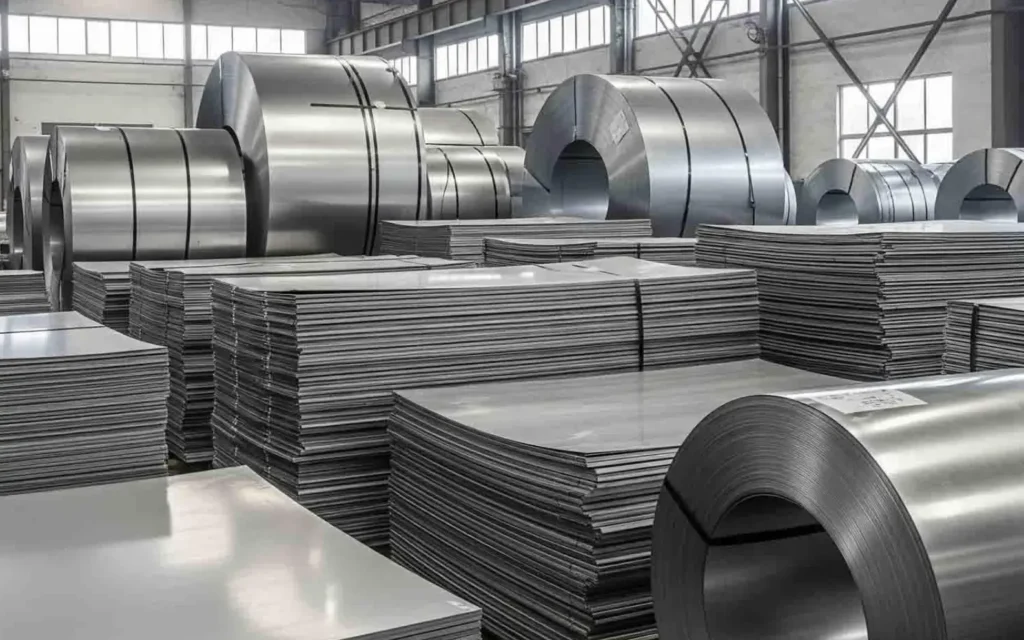
- Inconel 625 Sheets, Plates, Coils Overview
- Types of Inconel 625 Sheets, Plates, Coils
- Inconel 625 Sheets, Plates, Coils Specifications
- Inconel 625 Sheets, Plates, Coils Chemical Composition
- Inconel 625 Sheets, Plates, Coils Mechanical Properties
- Inconel 625 Sheets, Plates, Coils Equivalent Grades
- Inconel 625 Sheets, Plates, Coils Applications
- Why Choose Metals Fabrica for Inconel 625 Sheets, Plates, Coils?
- Inconel 625 Sheets, Plates, Coils FAQs
- Request a Quote for Inconel 625 Sheets, Plates, Coils
Inconel 625 Sheets, Plates, Coils Overview
Inconel 625 is a nickel-chromium-molybdenum alloy with 20–23% chromium, 8–10% molybdenum and 3.15–4.15% niobium plus tantalum. Molybdenum and niobium stiffen the nickel matrix, so annealed 625 plate is far stronger than 600 or 825 without any ageing treatment, and they give it outstanding resistance to pitting, crevice corrosion and chloride stress-corrosion cracking in seawater and acid media.
ASTM B443 recognises two heat-treatment grades. Grade 1 is annealed at a lower temperature, around 870 °C minimum, which keeps a fine grain and the highest room-temperature strength; it is the normal choice for corrosion service up to about 593 °C. Grade 2 is solution annealed at about 1093 °C minimum, giving a coarser grain and better creep-rupture strength for service above that temperature. Plate is hot rolled, while sheet and coil are cold rolled and annealed for forming and lining work.
Thin 625 sheet is widely used as wallpaper lining over carbon steel, an alternative to weld overlay,, and heavier plate for clad-free vessels and seawater equipment. Metals Fabrica supplies 625 sheet, plate and coil and confirms the grade before quoting. For machined parts in the same alloy, see Inconel 625 bar, and for piping, Inconel 625 pipe.
- Standard: ASTM B443 / ASME SB443, UNS N06625
- Grades: Grade 1 annealed; Grade 2 solution annealed
- Strength: 827 MPa tensile minimum in Grade 1 without ageing
- Corrosion: high pitting and crevice resistance in chlorides
Types of Inconel 625 Sheets, Plates, Coils
Inconel 625 Grade 1 Annealed Plate
Fine-grained annealed plate with the highest room-temperature strength under B443, specified for seawater, acid and sour-service equipment operating up to about 593 °C.
Inconel 625 Grade 2 Solution-Annealed Plate
Coarser-grained plate solution annealed for creep-rupture strength, used for high-temperature ducting, bellows and exhaust parts running above about 593 °C.
Inconel 625 Cold-Rolled Sheet
Thin annealed sheet for formed ducts, expansion bellows, flue liners and wallpaper cladding welded over carbon steel in corrosive gas streams.
Inconel 625 Coil and Strip
Coiled and slit strip for gaskets, spiral-wound seals, flexible hose, metal bellows and stamped parts produced in high volumes.
Inconel 625 Cut-to-Size Plate
Plate profiled by waterjet or plasma into rings, tube sheets, blind discs and machining blanks, so the buyer pays only for the alloy used.
Inconel 625 Sheets, Plates, Coils Specifications
| Specification | Details |
|---|---|
| Product standard | ASTM B443 / ASME SB443 Grade 1 and Grade 2 |
| UNS / Werkstoff Nr. | N06625 / 2.4856 |
| Sheet thickness | 0.3 – 6 mm |
| Plate thickness | 6 – 150 mm and above |
| Width | 1000, 1219, 1500, 2000, 2500 mm and to order |
| Length | 2000, 2500, 3000, 6000 mm; coils and cut to size |
| Finish | Hot rolled annealed and pickled, cold rolled annealed and pickled, bright annealed on request |
| Forms | Sheet, plate, coil, strip, shim, circles, cut-to-size blanks |
| Heat treatment | Grade 1: annealed at 871 °C (1600 °F) minimum; Grade 2: solution annealed at 1093 °C (2000 °F) minimum |
| Testing | Tensile and chemical analysis per B443; PMI, ultrasonic testing of plate, intergranular corrosion test to ASTM G28 on request |
| Documentation | EN 10204 3.1 mill test certificate; EN 10204 3.2 on request |
State Grade 1 or Grade 2 in your enquiry; if no grade is specified, B443 product is normally supplied as Grade 1.
Inconel 625 Sheets, Plates, Coils Chemical Composition
| Grade | UNS | Ni | Cr | Mo | Nb+Ta | Fe | C | Mn | Si | Other |
|---|---|---|---|---|---|---|---|---|---|---|
| 625 (Grade 1 and 2) | N06625 | 58.0 min | 20.0 – 23.0 | 8.0 – 10.0 | 3.15 – 4.15 | 5.0 | 0.10 | 0.50 | 0.50 | P 0.015; S 0.015; Al 0.40; Ti 0.40; Co 1.0 |
Inconel 625 Sheets, Plates, Coils Mechanical Properties
| Grade / Condition | Density | Melting Range | Tensile Strength, min | Yield Strength (0.2% Offset), min | Elongation in 50 mm, min |
|---|---|---|---|---|---|
| Grade 1, annealed | 8.44 g/cm³ | 1290 – 1350 °C | 827 MPa (120 ksi) | 414 MPa (60 ksi) | 30% |
| Grade 2, solution annealed | 8.44 g/cm³ | 1290 – 1350 °C | 690 MPa (100 ksi) | 276 MPa (40 ksi) | 30% |
Density and melting range are typical values, not B443 requirements. Cobalt is reported only when determined.
Inconel 625 Sheets, Plates, Coils Equivalent Grades
| Grade | UNS | Werkstoff Nr. | EN | JIS | BS | AFNOR | GOST |
|---|---|---|---|---|---|---|---|
| Inconel 625 | N06625 | 2.4856 | NiCr22Mo9Nb | NCF 625 | NA 21 | NC22DNb | – |
Equivalents are close but not identical in every limit. Order to the standard named in your specification.
Inconel 625 Sheets, Plates, Coils Applications
Seawater and Offshore Equipment
Plate for seawater-cooled exchangers, riser sheathing and splash-zone protection, where molybdenum and niobium prevent pitting and crevice corrosion in warm chloride water.
Flue Gas Desulphurisation Linings
Thin 625 sheet welded as wallpaper lining inside absorbers, ducts and stack flues to resist acidic chloride condensate at a fraction of solid-alloy cost.
Aerospace Ducting and Bellows
Formed sheet for engine exhaust ducting, thrust-reverser parts and expansion bellows that need strength, weldability and oxidation resistance at temperature.
Chemical Reactors and Scrubbers
Vessel plate for phosphoric, nitric and mixed-acid processes and chlorinated media, where 625 outperforms 316L and alloy 825.
Sour Oil and Gas Processing
Plate and strip for separators, valve components and seals exposed to hydrogen sulphide, carbon dioxide and chlorides under pressure.
Nuclear and Waste Processing
Grade 1 plate for reprocessing and waste-handling equipment, chosen for general corrosion resistance and stable properties after welding.
Why Choose Metals Fabrica for Inconel 625 Sheets, Plates, Coils?
- Grade 1 or Grade 2 confirmed: we check your design temperature so the correct B443 grade appears on the quotation and certificate.
- Gauges for lining and fabrication: thin sheet for wallpaper cladding and heavy plate for vessels are reviewed against your drawing and welding plan.
- Matching nickel alloy items: plate quoted with Inconel 625 fasteners, Inconel flanges and fittings.
- Testing coordinated: EN 10204 3.1 certificates, with G28 corrosion testing, PMI or third-party inspection arranged when your order requires them.
Inconel 625 Sheets, Plates, Coils FAQs
What is the difference between Inconel 625 Grade 1 and Grade 2 plate?
Grade 1 is annealed at a lower temperature and has a fine grain with higher minimum strength: 827 MPa tensile and 414 MPa yield. Grade 2 is solution annealed at a higher temperature, giving 690 MPa and 276 MPa minimums but better creep-rupture strength above about 593 °C.
Is Inconel 625 sheet suitable for seawater?
Yes. Its high molybdenum and niobium content give a very high pitting resistance, and 625 is widely used for seawater-cooled and splash-zone equipment where 316L and duplex steels may pit or crevice-corrode.
Can Inconel 625 plate be age hardened?
625 is designed as a solid-solution alloy and is used in the annealed or solution-annealed condition. Long exposure between about 600 °C and 800 °C can cause some hardening and loss of ductility, which designers should consider for high-temperature parts.
What thickness of Inconel 625 sheet is used for wallpaper lining?
Wallpaper lining typically uses thin 625 sheet of about 1.6 to 2 mm, welded in strips over a carbon steel substrate. Confirm the thickness specified by your lining design before ordering.
What tests can be ordered on Inconel 625 plate?
Beyond the B443 tensile and chemical tests, buyers often request PMI, ultrasonic examination of plate, and intergranular corrosion testing to ASTM G28. Test requirements should be listed in the purchase order.