- Mohammed Ali Road, Mumbai, Maharashtra 400003, India.



ASTM A709 Grade 36 Sheet, Plate & Coil Supplier in Mumbai
- Home
- Products
- Sheets, Plates & Coils
- Carbon Steel Sheets, Plates & Coils Supplier in Mumbai, India
- ASTM A709 Grade 36 Sheet, Plate & Coil Supplier in Mumbai
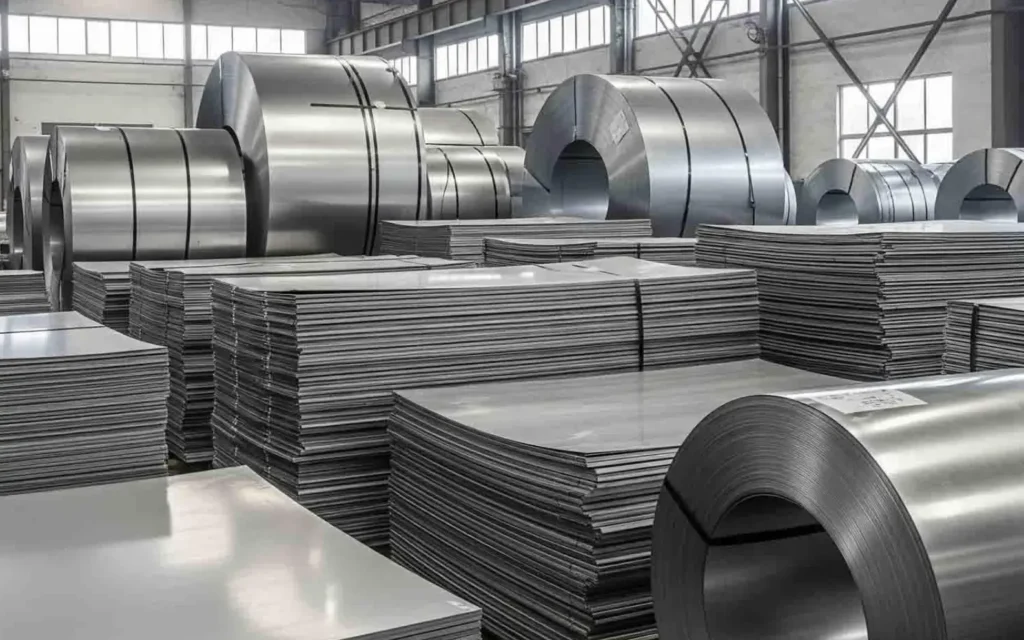
- ASTM A709 Grade 36 Sheet, Plate & Coil Overview
- Types of ASTM A709 Grade 36 Sheet, Plate & Coil
- ASTM A709 Grade 36 Sheet, Plate & Coil Specifications
- ASTM A709 Grade 36 Sheet, Plate & Coil Chemical Composition
- ASTM A709 Grade 36 Sheet, Plate & Coil Mechanical Properties
- ASTM A709 Grade 36 Sheet, Plate & Coil Equivalent Grades
- ASTM A709 Grade 36 Sheet, Plate & Coil Applications
- Why Choose Metals Fabrica for ASTM A709 Grade 36 Sheet, Plate & Coil?
- ASTM A709 Grade 36 Sheet, Plate & Coil FAQs
- Request a Quote for ASTM A709 Grade 36 Sheet, Plate & Coil
ASTM A709 Grade 36 Sheet, Plate & Coil Overview
ASTM A709 is the standard for structural steel used in bridges, and it collects carbon, high-strength low-alloy, weathering and quenched-and-tempered grades under one specification. Grade 36 is its carbon steel grade, with 250 MPa (36 ksi) minimum yield and 400–550 MPa tensile strength. It is the bridge counterpart of ASTM A36, with near-identical chemistry, and AASHTO adopts it as M 270 Grade 36.
What sets A709 apart is mandatory notch toughness for main members. Plate is ordered with a suffix that sets the Charpy requirement: T for non-fracture-critical tension components and F for fracture-critical members, combined with Temperature Zone 1, 2 or 3 according to the lowest service temperature at the bridge site. Fracture-critical plate needs higher absorbed energy and is tested more often, typically on every plate. Chemistry follows the A36 thickness bands, and Grade 36 plate is limited to 100 mm thickness.
Choose A709 Grade 36 for bridge girders, cross-frames, diaphragms and bearing plates where the designer specifies carbon steel, and A572 Grade 50 or A709 Grade 50 where more strength is needed. Metals Fabrica supplies A709 Grade 36 plate and confirms the T or F designation, temperature zone and test frequency with every order.
- Standard: ASTM A709 / A709M Grade 36 (AASHTO M 270 Grade 36); ASTM A6
- Strength: 250 MPa yield, 400–550 MPa tensile
- Toughness: Charpy V-notch, T or F, Zones 1–3
- Plate thickness limit: 100 mm
Types of ASTM A709 Grade 36 Sheet, Plate & Coil
A709 Grade 36T Plate
Plate for non-fracture-critical tension members, Charpy tested to the T requirement at the temperature for Zone 1, 2 or 3 as specified.
A709 Grade 36F Plate
Fracture-critical plate with higher Charpy energy and testing of each plate, for members whose failure could cause bridge collapse.
A709 Grade 36 Untested Plate
Plate without Charpy testing for secondary and compression members where the bridge design does not require toughness verification.
A709 / A36 Dual-Certified Plate
Plate certified to both A709 Grade 36 and A36 for projects mixing bridge and general structural steelwork, so one stock of plate can serve both.
A709 Grade 36 Bearing and Sole Plates
Thick Grade 36 plate supplied in cut sizes for bearing assemblies, sole plates and masonry plates, allowing for machining stock on faces.
ASTM A709 Grade 36 Sheet, Plate & Coil Specifications
| Specification | Details |
|---|---|
| Standard | ASTM A709 / A709M Grade 36; AASHTO M 270 Grade 36 |
| General requirements | ASTM A6 / A6M |
| Thickness | Sheet 0.3 – 6 mm; plate 6 – 100 mm (Grade 36 limit) |
| Width | 1000, 1219, 1500, 2000, 2500 mm and to order |
| Length | 2000, 2500, 3000, 6000 mm; coils and cut to size |
| Delivery condition | As-rolled |
| Toughness designation | 36T (non-fracture-critical) or 36F (fracture-critical), Temperature Zone 1, 2 or 3 |
| Surface finish | Hot rolled black, shot blasted and primed |
| Forms | Plate, sheet, cut blanks, bearing plates |
| Testing | Tensile test per A6; Charpy V-notch per A673 (H frequency for T, P frequency for F); ultrasonic on request |
| Documentation | EN 10204 3.1 mill test certificate; EN 10204 3.2 on request |
State the T or F designation and temperature zone; plate ordered as plain Grade 36 carries no Charpy requirement.
ASTM A709 Grade 36 Sheet, Plate & Coil Chemical Composition
| Plate thickness | C | Mn | P | S | Si | Cu (when specified) |
|---|---|---|---|---|---|---|
| ≤ 20 mm | 0.25 | – | 0.030 | 0.030 | 0.40 | 0.20 min |
| > 20 to 40 mm | 0.25 | 0.80 – 1.20 | 0.030 | 0.030 | 0.40 | 0.20 min |
| > 40 to 65 mm | 0.26 | 0.80 – 1.20 | 0.030 | 0.030 | 0.15 – 0.40 | 0.20 min |
| > 65 to 100 mm | 0.27 | 0.85 – 1.20 | 0.030 | 0.030 | 0.15 – 0.40 | 0.20 min |
ASTM A709 Grade 36 Sheet, Plate & Coil Mechanical Properties
Tensile Requirements
| Grade | Tensile Strength | Yield Strength, min | Elongation in 200 mm, min | Elongation in 50 mm, min |
|---|---|---|---|---|
| Grade 36 | 400 – 550 MPa (58 – 80 ksi) | 250 MPa (36 ksi) | 20% | 23% |
Density about 7.85 g/cm³ (typical, not a requirement).
Charpy V-Notch Requirements (plate ≤ 100 mm)
| Designation | Minimum average energy | Zone 1 | Zone 2 | Zone 3 |
|---|---|---|---|---|
| 36T (non-fracture-critical) | 20 J (15 ft·lbf) | 21 °C (70 °F) | 4 °C (40 °F) | −12 °C (10 °F) |
| 36F (fracture-critical) | 34 J (25 ft·lbf) | 21 °C (70 °F) | 4 °C (40 °F) | −12 °C (10 °F) |
Zone 1 covers minimum service temperatures of −18 °C and above, Zone 2 below −18 °C to −34 °C and Zone 3 below −34 °C to −51 °C.
ASTM A709 Grade 36 Sheet, Plate & Coil Equivalent Grades
| Grade | UNS | EN | JIS | GB | IS |
|---|---|---|---|---|---|
| ASTM A709 Grade 36 | – | S275J0 / S275J2 (EN 10025-2) | SM400A / SM400B | Q235C / Q235D | IS 2062 E250 B0 / C |
Equivalents are approximate; impact-tested grades are listed because A709 main members require Charpy testing. Bridge owners normally require the specified standard.
ASTM A709 Grade 36 Sheet, Plate & Coil Applications
Plate Girder Bridges
Webs and flanges of welded plate girders for highway and rail bridges, ordered as 36T or 36F to suit member criticality.
Cross-Frames and Diaphragms
Bracing plates, connection plates and diaphragms between girders, often ordered as plain Grade 36 or 36T depending on whether the members carry tension.
Bridge Bearings
Bearing components for elastomeric, pot and rocker bearings, cut from thick Grade 36 plate and machined to the flatness the bearing design requires.
Pedestrian and Rail Overbridges
Smaller footbridges and foot-over-bridges where carbon steel strength is sufficient and toughness must suit local temperatures at the site.
Bridge Repair and Strengthening
Cover plates, splice plates and replacement members for rehabilitation of existing steel bridges originally built in carbon steel of similar strength.
Why Choose Metals Fabrica for ASTM A709 Grade 36 Sheet, Plate & Coil?
- T, F and zone checked: we confirm the Charpy designation and temperature zone for each member before quoting.
- Test frequency on the certificate: heat or per-plate testing is matched to the fracture-critical status of the member.
- Thickness within the grade limit: plate over 100 mm is flagged for an alternative grade.
- Bolting and bar: plate can be quoted with high-tensile fasteners and carbon steel bars.
- Documentation: EN 10204 3.1 certificates with Charpy results; 3.2 inspection when the owner requires it.
ASTM A709 Grade 36 Sheet, Plate & Coil FAQs
What is the difference between ASTM A709 Grade 36 and A36?
Chemistry and tensile requirements are essentially the same. A709 is the bridge standard and adds Charpy impact requirements through the T and F designations and temperature zones, which A36 does not have.
What do 36T and 36F mean?
T designates non-fracture-critical tension members and F designates fracture-critical members. F plate requires higher Charpy energy and testing of every plate, because failure of the member could lead to collapse.
How is the temperature zone chosen?
The zone is set by the lowest anticipated service temperature at the bridge site. Zone 1 covers the mildest climates and Zone 3 the coldest, and each zone has a lower Charpy test temperature.
Is A709 Grade 36 the same as AASHTO M 270 Grade 36?
AASHTO M 270 and ASTM A709 are harmonised, so Grade 36 is equivalent in both. Bridge owners may specify either designation.
Request a Quote for ASTM A709 Grade 36 Sheet, Plate & Coil
Sheets, Plates & Coils by material
Carbon Steel Sheet, Plate, Coil grades
- Carbon Steel Sheet, Plate, Coil
- ASTM A36 Sheet Plate, Coil
- ASTM A283 Grade C Sheet Plate, Coil
- ASTM A285 Grade C Sheet Plate, Coil
- ASTM A515 Gr 60 Sheet Plate, Coil
- ASTM A515 Gr 70 Sheet Plate, Coil
- ASTM A572 Grade 50 Sheet Plate, Coil
- ASTM A516 Grade 60 Sheet Plate, Coil
- ASTM A516 Grade 65 Sheet Plate, Coil
- ASTM A516 Grade 70 Sheet Plate, Coil
- ASTM A537 Class 2 Sheet Plate, Coil
- ASTM A709 Grade 36 Sheet Plate, Coil
- C45 Sheet Plate, Coil
- IS 2062 E250 / E350 Sheet Plate, Coil